The short answer
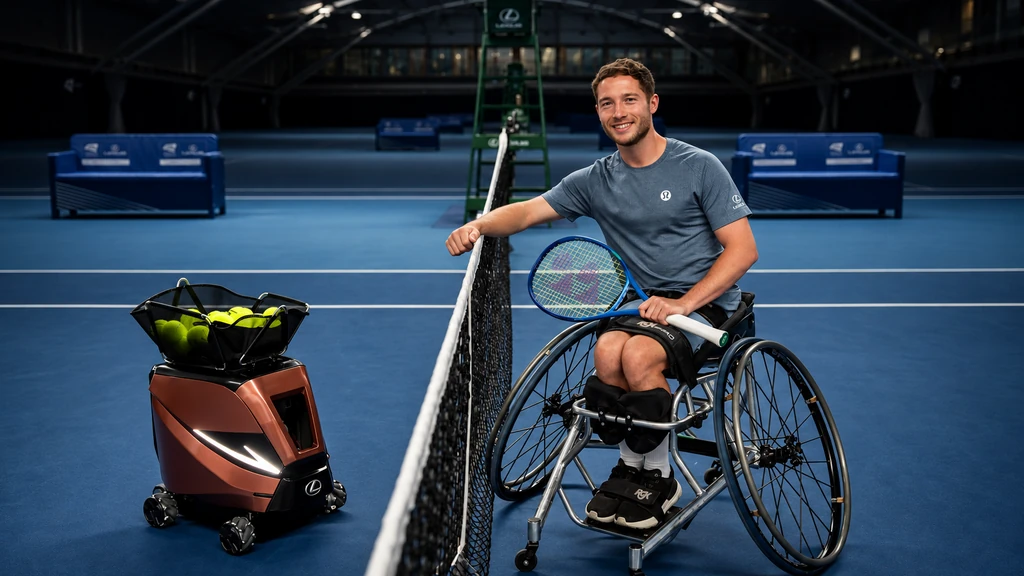
On a real court, a 93mph serve is a problem you feel before you can explain it. Lexus Signature Shot asked people to face a version of Alfie Hewett’s 2024 Wimbledon-winning serve. Sportbot supplied the base machine and custom app, while Unit9 worked on the software side. The team studied Hewett’s style and used performance data, video analysis and online statistics to turn selected shots into repeatable machine behaviour. That is the useful part of the project: it connects a player-specific reference to equipment someone can actually face.
What is Lexus Signature Shot?
Lexus Signature Shot was designed to let people experience selected shots from professional tennis players through a physical, on-court challenge. In its original Signature Shot story, Lexus describes a professional-grade drill machine paired with bespoke software. The source says performance data, video analysis and online statistics were used to reproduce selected shot angles, trajectories and spin. The task was to make a player experience a reference shot, not just read its speed on a screen.
The collaboration behind the machine
Sportbot supplied the base machine and custom app. Unit9 also worked on the software, so the project had to connect the machine, its controls and the wider experience. The result still had to live in hardware that could launch a ball, move on court and follow the controls.
Unit9’s project account describes bespoke software and an engineered machine built around the data and video of Alfie Hewett and Katie Boulter, with Lexus design cues carried into the final experience. That account shows how the project joined player references with a physical machine rather than leaving the idea as a campaign visual.
Why Alfie Hewett’s style made this an engineering problem
Before anyone could face the shot, the team had to work out what made Alfie Hewett’s shots recognisable. The project had to express that reference through pace, angle, trajectory and spin. The 93mph serve from Hewett’s 2024 Wimbledon win gave Lexus a measurable headline, but speed alone did not describe the shot.
That distinction is why player analysis mattered. A player does not react to a number in isolation. They react to where the ball arrives and how it travels through the court.
From a ball feed to a moving court scenario
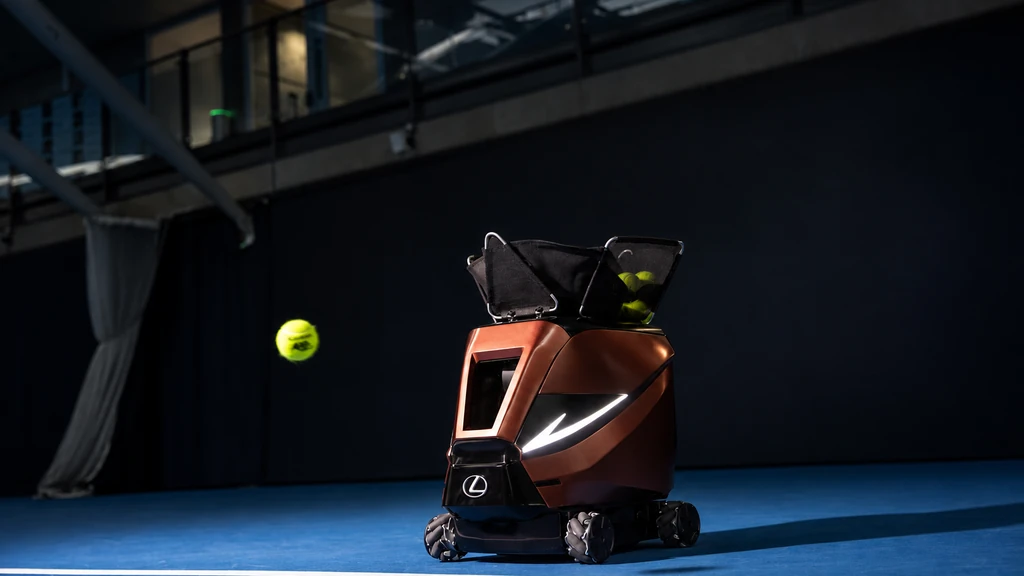
Shortlist’s independent account of trying Signature Shot gives the clearest picture of the court experience. It reports three difficulty levels, a raised stand for the serve setup and forward, backward and sideways movement for groundstroke scenarios.
Those details describe what happens after the ball leaves the machine: the player has to read it, adjust position and recover. The Lexus build was a campaign-specific configuration, so its settings should not be read as a promise that every standard Sportbot setup includes a Lexus shot profile.
What the project shows about realistic training technology
The Lexus project was custom, but the court problem is familiar. A repetition becomes more useful when the player has to read and move for the ball instead of standing in one place. Sportbot’s moving tennis ball launchers are built for that kind of work. This case study should not be read as a claim that the standard product includes the Lexus shot profile.
The constraints are part of the story
The Lexus and Unit9 accounts establish how the experience was described: data, video, bespoke software and a physical machine. They do not provide a measured training result or a universal setting for every Sportbot machine.
So the safe conclusion is specific. The collaboration turned selected player references into a court challenge that people could face. It does not show that a standard ball machine can reproduce every part of a professional player’s game.
Watch the project
The Sportbot video shows the machine and on-court experience behind the Lexus Signature Shot project.
You can also open the video on YouTube, then read Lexus’s original Signature Shot story for the campaign background.
What is Lexus Signature Shot?
It is a Lexus tennis experience built around a professional-grade ball machine and bespoke software that models selected professional shots using performance data, video analysis and statistics.
Who worked on the project?
The project brought together Lexus, Sportbot and Unit9. Sportbot supplied the base machine and custom app, while Unit9 also worked on the software collaboration and wider engineered experience.
What made the project difficult?
The team had to translate Alfie Hewett’s playing style into repeatable machine behaviour. The reference included pace, angle, trajectory and spin, while the court setup had to make the shot possible to face.
Is Signature Shot a standard Sportbot product?
No. It was a custom campaign collaboration. Players and coaches looking for moving tennis-ball training can learn more about the standard Sportbot tennis ball launcher, while keeping the Lexus configuration in its proper project context.
Where can I find the original story?
The original Lexus article contains the campaign overview, and the Sportbot video is linked above.
For more Sportbot collaborations and updates, browse the Sportbot News & Events archive.